What Makes Us Moo
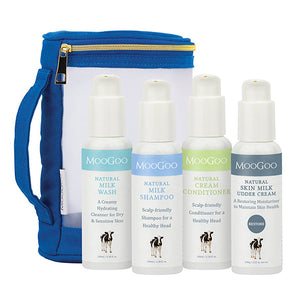
MooGoo is an Australian company that makes a range of natural, safe products with effective active ingredients designed for people with skin and scalp problems.
MooGoo was first made when the founder adapted a cream used in dairy farms to help a family member with a skin problem. The dairy version of ‘udder cream’ was designed to heal cow’s udders and keep them in good condition for milking. It was full of skin repair ingredients and no fillers.
We have since expanded to make a range of skin products for people with skin problems. We use the same philosophy in all their products. The full strength of healing ingredients and no petroleum or chemical based ingredients. All ingredients are listed on our products.
Every product we have was made for our own use or for friends or family. We add the full concentration of ingredients we know are needed to help the skin or the scalp. MooGoo does not use gimmick ingredients and marketing, or cheap filling ingredients.
Watch this vid to see how some moisturisers are made!

Want to read on a little more?
Why We Don't Use Paraffin Oil in Skin Care
Almost half the population of Australia is now affected by some sort of skin problem. (1999 survey, St Vincent's Hospital). The number of people with eczema has doubled every decade since petroleum based detergents became commonly used for washing and Paraffin Oil (also petroleum based) became the dominant oil used in skin care. Read More...
The cheapest way to make a moisturising cream is to use Paraffin Oil, also called Mineral Oil, which is derived from petroleum. For cosmetic use, this oil is should be refined to eliminate the carcinogenic aromatic hydrocarbons that are present in unrefined mineral oils. Despite this, an analysis did find that “mineral oils used for medicinal and cosmetic purposes reveal the presence of several carcinogenic polycyclic aromatic hydrocarbons .” (Link) However reputable manufacturers should be using properly refined Mineral Oil in their moisturising creams. Paraffin Oil may suit many people as a moisturising oil. One advantage of Paraffin Oil is that very few people are allergic to it because it is synthetic.
Paraffin is an “occlusive” oil that coats the skin. The skin will feel moisturized because it has a greasy film of Paraffin Oil on top. Many pharmacy creams use Paraffin (Mineral) Oil, and add very small amounts of other ingredients for their label.
A survey of 100 British children treated with aqueous cream (Paraffin Oil and Water) has found it irritated over half of them. Their symptoms ranged from redness and itchiness to burning and stinging, which risk making their condition worse. Writing in The Pharmaceutical Journal, the researchers urged patients and clinicians to be aware of the problem. (Source)
MooGoo does not use Mineral Oil in any of its products. We suggest checking your skin care products to see how many use Paraffin Oil. You may be surprised. Paraffin Oil is also used to make Sorbolene, Baby Oil, Bath Oil (some brands), Washing Creams. many Eczema Creams, Bio-Oil and sunscreens etc
Did you know that not all ingredients need to be shown on the label?
If the ingredients start off reading like a medieval love potion, chances are the real ingredients are submerged somewhere in the middle.
When water and natural edible oils are combined in skin care products, ingredients are needed to keep them fresh. If there are no preservation ingredients shown on the label, then the product will become contaminated with bacteria very quickly, just like any food. The bacteria cannot be seen or smelt. A poorly preserved cream can cause serious skin infection and eye damage if used on the face. Grapefruit Seed Extract and Essential Oils have been proven many times to be unreliable methods of keeping products free from bacteria.
In our opinion, a tiny amount of an effective preservative is much safer on the skin than a large amount of bacteria.
Note: MooGoo creams have been independently tested to ensure they remain pure and uncontaminated for at least two years. when stored below 30 Degrees Celsius.This is a called a "Challenge Test. It is not a compulsory test in Australia. Read More...
Example:

Most people would assume the above product is mostly Colloidal Oatmeal. However, Oatmeal only makes up 2% of the product. In fact, 96.5% of the ingredients are not shown at all, nor do they need to be under Australian regulations for "listed" products, including sunscreen. In our opinion, this is a loophole which allows some brands to not disclose their ingredients. Usually the hidden ingredients include Paraffin Oil and other cheaper ingredients.

Looking at the above Vitamin E cream you would assume it is a simple product contain just 3 ingredients.
Reality: This cream is 1% Vitamin E and 0.5% Urea and Honey. Almost 98% of the ingredients are not shown. Each mg is 1/1000 of a gram.
If you believe that the regulations should be changed so that all ingredients on all skin products should be fully disclosed, please let us know.
We put all of our ingredients on the label, not just the "Actives".
Who Checks the Accuracy of Labels?
Although label guidelines state that ingredients should be listed in order of weight, this is not well enforced in Australia. Most most people do not realize that the cosmetic industry does not have inspectors checking the accuracy of ingredient listed. Read More...
With a little knowledge of how skin care products are made, it is very easy to see which products do not accurately show their real ingredients in order of concentration.
Below are typical examples of products whose main ingredients are submerged beneath organic ingredients with the aim of appearing more "natural".
Anonymous "Organic" Shampoo
The following is the ingredients list a popular "Certified Organic" Shampoo.. However we know this would not make a shampoo. If these were the ingredients in order of weight then the product would be a sort of herby soup.

A typical shampoo using this formula would really require the following as the major ingredients: Water, Olefin Sulphonate (petroleum based cleanser), Cocamidoproyl Betaine (Coconut based cleanser)...... However this shampoo lists the above.
Natural Ingredients and Allergies - Patch Test Your Products!
Many people are allergic to fruits, nuts, milk and other natural ingredients. Virtually nobody is allergic to Cola. This does not mean that Cola is good for our health and fruit is bad. The reason is that our bodies have not had the time to develop the wrong immune response (develop an allergy) to synthetic ingredients.
If you are prone to allergies, patch test all natural products on a small area of skin first. Once this is done, natural products are generally much better for health in our opinion.
Researching Your Ingredients - Websites claiming the ocean is toxic to our skin?!
According to some websites, Sodium Chloride is a dangerous chemical in skin care.
This website has statements such as “Sodium Chloride - Positive mutation assay: Mutation in Mammalian Somatic Cells (mouse oth).” (Link)
It may seem after reading this "Cosmetic Database" and others that are similiar, that manufacturers are out to harm us with their products by using Sodium Chloride. But Sodium Chloride is just sea salt. We happily swim in the ocean which is full of Sodium Chloride and even EAT it. Read More...
Many websites claim that almost anything else with a chemical name is toxic without providing the full references. Presumably the aim is to shock people. This example shows how difficult it can be to research cosmetic ingredients accurately.
Scientists only give credit to articles with full references, and it should be the same for those researching ingredients. We suggest that the best way to check on ingredients you may be concerned about is to write to the company and ask why they use it. Usually they will have more information to help you make an informed decision. "Google Scholar" (www.scholar.google.com) is another way to search for science articles. Websites that do not provide references to studies are of little use as the example above shows.
Why do Many Washing Products Irritate? Even those labelled "For Sensitive Skin" or Eczema?
Why do we see Sodium Laureth Sulphate in almost all commercial washing products, despite its high skin irritation score? This includes most pharmacy products labeled for 'Sensitive Skin' or Eczema. The answer is it is the cheapest, and it can be warehoused for years.Read More...
Just add water and salt (to thicken), design a nice label, and voilà! A cheap, creamy shampoo or body wash. For people with sensitive skin, much more gentle cleansers could be used. In fact, there are cleansers like ours that don't irritate the skin any more than water. They only cost a few cents more per wash. They are natural too, Capric Glucoside is made from Glucose, not petroleum. Being natural, they are slightly harder to formulate and cannot be kept in storage for years like petroleum ingredients and this is why its "too hard" and too expensive for mass produced brands.
When we made our products for our own family's use, we used the mildest cleansers we could find anywhere. It has been amazing what a difference this has made to everyone's skin here at MooGoo.
What does "Dermatologically Tested" or "Approved by Dermatologists" mean?
"Claims such as 'dermatologically tested' or 'dermatologist approved' - found on many cosmetics, toiletries and some washing powders - are confusing and potentially misleading according to a UK Consumer Association. These 'derma' claims imply that a product has reached a certain level of safety or effectiveness. But there are no standard industry-wide definitions setting out how a product must be tested, and the results it needs to achieve." (WHICH -UK Consumer Association).
The Power of the word "Dermatology":
Lets look at the ingredients in detail...
Water - No problems.
Propylene Glycol - petrochemical penetration enhancer with high skin irritation. In this product at a high concentration.
Sodium Lauryl Sulfate - The most irritating petroleum based surfactant used in skin care. Good foam and cheap.
Paraben Mix - Preservatives with a dubious reputation.
There is no requirement for a product to prove it is endorsed by dermatologists even when this is put on the label. If these products were really formulated by dermatologists, we wonder why they chose such poor quality ingredients. We would think that the majority of dermatologists trained in skin care formulation would prefer better quality ingredients. The mention of dermatologists on the label make this type of product one of the most commonly suggested products for people with skin problems. We urge people to always look at the ingredients.
Some Pesticide To Soothe Your Scalp?
We encourage anyone using so-called "scalp care" products to do some research on the products' main active ingredient called Zinc Pyrithione. There are Government warning for workers using this ingredient as the active ingredient in anti-fouling boat paints and pesticides, yet it is also the active in many "Scalp Care" shampoos. Read More...
The following is from the U.S Environmental Protection Agency:
Areas of concern (for zinc pyrithione) include potential dermal and inhalation exposure risks during residential application of antifoulant boat paints and application of house paints which contain zinc pyrithione as an in-can preservative. Another concern involves potential occupational dermal and inhalation exposure risks to those who regularly work with the chemical. Full Report Here
There are alternatives to Zinc Pyrithione that are safe and non-irritating. They cost a little more, but what is an extra 10 cents per hair wash compared to using the active of a pesticide which can be risky for workers using it?
Natural Scare-Mongering.
We don't claim that everything not natural is dangerous. Sometimes science can concentrate the beneficial effects from natural ingredients. And we use those ingredients ourselves. However, we do feel that some skin care products use poor quality ingredients because they are cheap and easy to manufacture in large quantities. The real ingredients are often disguised by a long list of token "natural" ingredients placed at the start and end of the label. This is called "Greenwashing".
"Faux Organic"
"My shampoo ingredients look more like salad..."
Water is a "Certified Organic" ingredient under most schemes. If 75% of the formulation is water, then a "Certified Organic" product is achieved before any other ingredients are even added. Organically grown ingredients are a very small percentage of the total formulation and not enough to make a difference, except to price. Recent surveys have found only a few products have genuine independent organic accreditation. Read More...
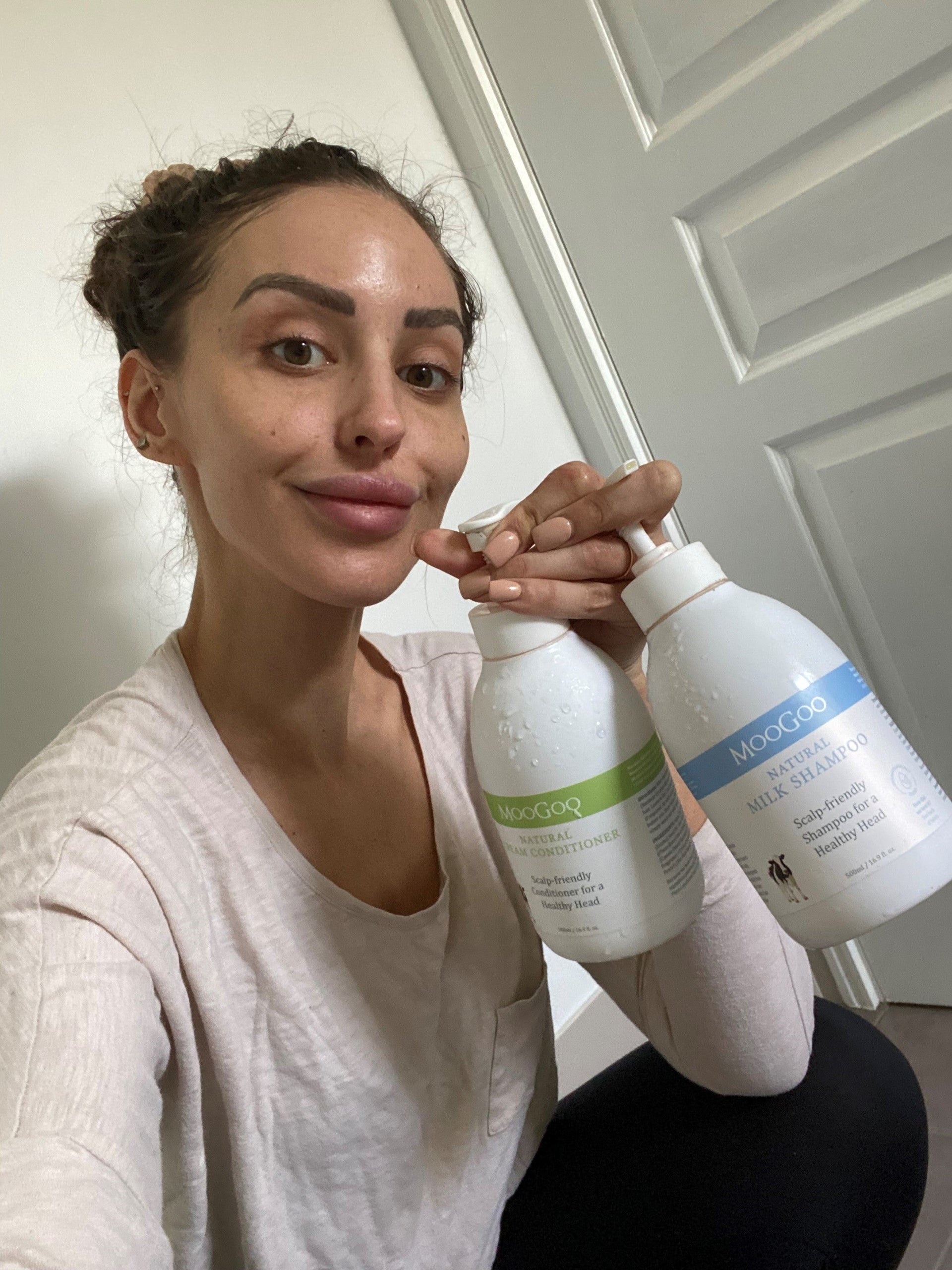
Washing products need something that cleans and foams. Organic extracts don't perform that function, so the label can be very misleading if it looks more like a salad then a shampoo.
There are some very good organic products, but we urge people to research before taking the label on face value. Many "organic" products are little more than re-branded supermarket formulas with a new label and new price.
Does High Price = Quality
"I Simply Won't Buy a Cream For Less Than $150" : It is tempting to believe that when spending more on skincare products, we are taking "better care" of our skin.

To some extent this is true. There are many cheap creams that are of very poor quality. However, there is also a marketing strategy of pricing creams expensively for no reason other than to increase sales to the high end market. Most people are not cosmetic chemists, and so really do not know what the ingredients are, and so will pay more in the hope it is better. Read More...
For example a "restoration" cream priced at $US155.00 for 50ml (yes - we find that hard to believe as well! ). It is nicely packaged. The major ingredients are :Water, Squalene, Glycerin (present in natural soap), Glyceryl Stearate (emollient), Avocado Oil (good and relatively cheap), Cyclomethicone (helps the feel of the cream) and Petrolatum (petroleum biproduct). Other ingredients are in minor quantities. This cream is around 75% water and not terribly expensive to make. However, if people want to spend that much, there will be plenty of companies happy to take the money. The packaging is gorgeous.
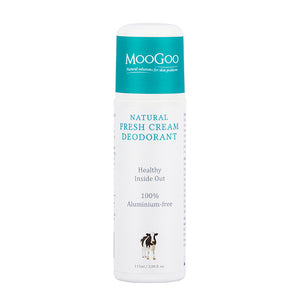
The ingredients in our creams are some of the most expensive available, and we use them in high concentrations. However, we are still able to cover costs while keeping the price affordable for everyday use.